
Building your trip around an activity, calculating days and budgets
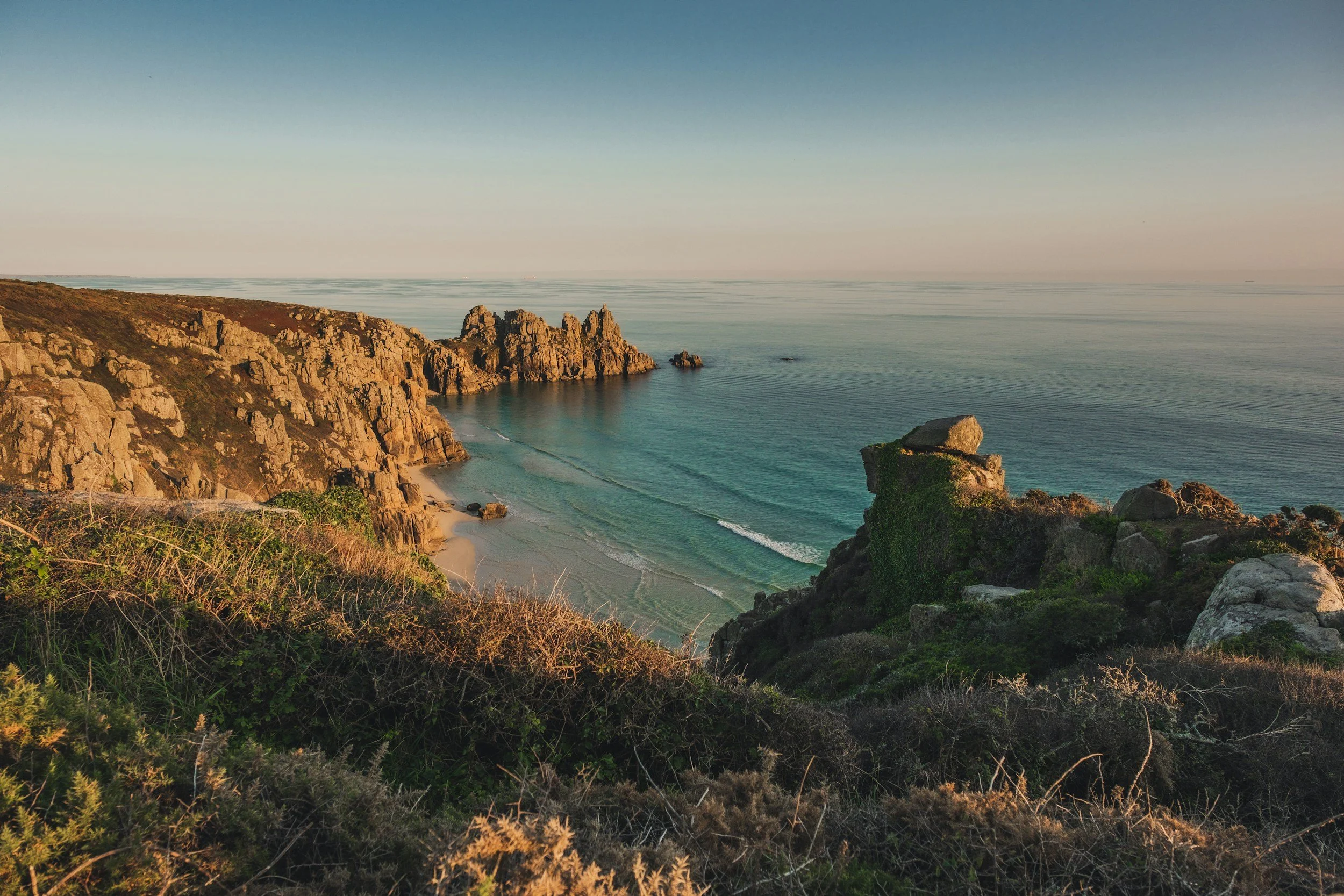
Building the trip around an activity
Some of our most memorable trips were built around a particular activity. Several trips were to hike sections of the coastal path in Cornwall in the Uk, another was to follow the trails out Wengen in the Swizz Alps. Another fun trip was to attend several of the highland games in Scotland.
Other activities included:
National or local festivals
Market days
Tour de France
Gardens
Harvest activities
Reenactments
Christmas markets
Investigations of cathedrals, castles, ruins, monuments, etc.
Sports
Counting the Days and Budget:
The planning for the trip and the trip is not two separate things. They are both exciting experiences. The planning should be fun and not a chore and will require much more thought and input than the trip. To a real extent when you first arrive at your destination most of your work is done, and now it simply becomes a matter of activating your plan and enjoying the results of all your efforts.
Everyone’s budget is different but still most people want value for the dollar. It is certainly more prudent for you to spend your dollar than for the tour company to spend your dollar and with that as your motivation get to work. We generally assume that we are planning 9-10 months out.
Where do we want to go? Why?
When do we want to go and for how long. One of the real advantages of being an older traveler is the ability to control the time of year for your adventure. I love off-season rates. Most of those damn tourists that all tourists hate, have gone home leaving elbow room for us older guys --- and the waiters are extra nicer.
Projected cost can be scoped out with a high level of accuracy. Get online and check airline tickets, check accommodations in the places you want to go, and the kind of accommodations, also check out the quality and location of the accommodations.
On our first trip to London the tour company had us in a nice hotel --- but the hotel was 30 miles from London which left us little time to explore London. Yes, 30 miles. The tour coach got us into London around 11 and took us back to our hotel for dinner. We hardly saw London.
Have I mentioned the word “preparation? Begin early looking for the best airfares. Soon there will be a confession but first give me a brief moment.
For the sake of argument, let’s say you want to fly to Rome, but you get a super fare into Milan. Flip your trip and start in Milan. Perhaps if you go six weeks earlier you get the fare you want. Check the weather forecast and the climate in your target area. Perhaps your itinerary is fixed by events then you simply must take the rates available.
Back to the confession. There has been some mention that I have been accused of being a tad more than thrifty. Now, this is very painful to put in writing but on our recent trips abroad we have flown business class. That’s true. I’m not sure I can justify that expense but at least let me attempt an explanation. I plead old age. I find myself using the old age card more and more with wonderful results. It is difficult to acknowledge this weakness, and you must promise that my confession will go no further.
I hate economy seating because it’s not seating at all --- it’s crunching. A young person can be crunched in any position, in any configuration, for any duration if they have their smart phone and headset. None of those configurations work for me. To be seated in economy knowing that just forward of that cruel and degrading partition awaits a full comfortable stretch out bed with real pillows and blankets and endless glasses of sparkling wine is now more than I can abide. Economy be damned! So, I joyfully punch into my computer 2 round trip business class tickets and hit, BUY.
As an older person I shouldn’t harp on how tiring the total economy flight experience is for me, but nor do I want to fail to acknowledge the reality of the flight experience. At the end of the flight, I will either drive or navigate to the city. I need to be at my best. The same for you. I know flying economy is not like weeks aboard the Mayflower, or the coffin ships that sailed from Ireland, but if they could have flown business they would have been stretched out watching The Sound of Music.
TIP! Business class travel. We are new to this, so we are just learning the ins and outs. If you know what we should know please share your ideas. Here’s what we have learned.
As soon as we walk into the terminal we ask for senior assistance for business class passengers. IT IS FANTASTIC. Help comes from all sides. Golf carts magically appear as helping hands are extended. We are whisked to the near empty business counter as our luggage is put on the scales and we receive our tickets, boarding passes and then the whisking continues as we are golf carted to the sounds of beeping and blinging lights in and out of “those economy type people” who must shuffle along the miles endless hallways to gate 434D.
The cart’s destination? A discreetly secretive lounge that opens its door to leather sofas, and chairs and gourmet delights where we await the call to board. We are in no hurry.
Once in the plane we are escorted to gobs of luxurious space. I go to sleep and wake up for breakfast and a rested beginning to our first day.
Upon arrival --- we are the first to deplane (horrible word) and met by greeters and another gulf cart to our luggage, which comes off the shut first, yes first. Then we continue to an EMPTY CUSTOMS STATION and then are sent on our way to the car shuttle. Power to old people!
STOP! Why go out for dinner? It’s your call, but you can spend $100 at some Burp and Go in your hometown or $75 in a biergarten overlooking the Danube. Your call. Maybe your budget has more smiley faces than ours, so cost is not the issue, but for us every dollar not spent at home is one more dollar available for the next trip.
Deed and I need to carefully plan our trip guided not only by who we are, and what we want to experience but to wrap it all in a budget that keeps our heads above water once the trip is over. You may be blessed and able to skip this next section, but for those on a budget, even a generous budget, we offer s few suggestions.
Our strategy is to save enough before the trip to cover the entire cost so that we are not financially and mentally burdened with expenses after the trip is over.
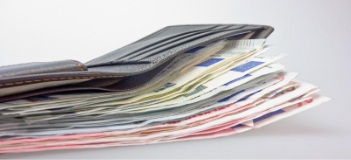
Take a good long look at the wallet. Look again. I think that is what a wallet should look like. At home my wallet contains every discount card I have ever been given, but with Deed’s tutelage my European wallet is a slim Jim. At home I tend to pay cash for everything while Deed, on the other hand, has made a quicker and more realistic adjustment to the new financial realities of plastic. Even on our recent trip to England before we left home, I loaded up with pound notes. Deed was right about taking too much cash. I came home with over 90% of the original pounds. That was not economical. I paid in dollars to buy pounds; then when I got home I bought with the same pounds dollars.
During our trip to England no one wanted “money”, even the metered parking in the small towns required a card. I put a newspaper on the card. I was finally convinced that plastic is the future, but to my frustration I’m starting to realize my smart phone tops plastic and now plastic is on the way out. I was about to write about my views on technology, but Deed gave me a box to the ear so there you go.
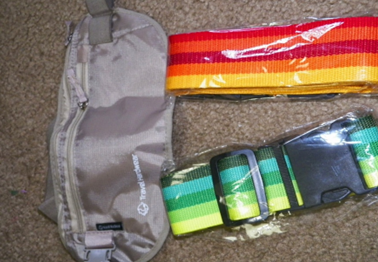
Do you see that money belt on the left side of the picture?
We have had a love/hate relationship with money belts for over 50 years. For Deed it is actually a hate/hate relationship. For Deed most decisions in life revolve around how flattering things are in juxtaposition to her body. For example, she always keeps me a measured distance from her. But with the money belt it is worn on her hips. I expect she will rewrite this section.
Do we wear money belts? Yes! All the time in large cities. A money belt is essential protection. When we get home --- we burn the suckers.
Back to plastic and phones.
So, I take 2-3 cards. Master and Visa are the preferred cards. ATMs are everywhere but they can be expensive so check with the programs that your local bank and your credit cards offer. Make sure your phone is compatible with your itinerary.
Tip! Update all devices, confirm contacts, apps, eBooks, maps, language, meds, money converters, etc.
Also, in the money belt there will be your passport, driver’s license, medical cards, insurance cards, and some currency. That’s correct. No wallet. More latter about a purse.
We return to the budget.
I consider myself moderately frugal. Deed, on the other hand, considers me creatively cheap, to the point that she has issues with me when I take pennies from the change dish at the counter. You know, the dish that has a sign, “Leave a penny; take a penny”. One time she even took offense when I left the airplane with 8 bags of nuts. Women, go figure.
Again, I digress.
Our first trip to Europe was on a budget of $1,200 and that was for 5 weeks. No, that is not a typo. Even more amazing we were under budget.
How do we plan our budget? First, we give ourselves lots of time to plan. The actual trips are between 3-8 weeks, but saving for our “Dream Account” takes a good part of a year.
Accommodations: On accommodations we are not too frugal but operate under the principle that we have, at our age, more money than time. It’s like when your realtor says. “Location, Location, Location”. That stuff about location also applies when traveling.
Download a tourist map of Rome. Conduct a thorough search on YouTube to identify the top 25-30 places to visit and activities to engage in while in Rome. Also, let’s say you’re going to be in Rome 6-8 nights. Lay out on a table your tourist map of Rome --- there was a time we used to lay out the map on the floor, but we now use the floor less often.
Now let’s find a place to lay your head at night. Using your tourist map of Rome locate and circle these places on the map: 1. Trastevere, 2. Terme di Caracalla, 3. Termini, 4. Villa Borghese, 5. Vatican City, and back to 6. Trastevere. Now in order connect 1 to 2 to 3 ---6. Wow! That was fun.
Next, find a hotel/apartment within the uniquely shaped configuration. You may never have to leave that area during your stay in Rome, and within that target area you will have a wonderful awareness of ancient Rome. We always find accommodations within our target areas be it Rome, Prague, Paris or the smallest village. Inside the target costs more but we save countless hours of wasted time getting into the target area. It’s like going to Las Vegas and staying 35 miles outside in some desert town. Once again, the big question will help you find the best accommodation. In front of you will be a full range of hotels, apartments, and B&Bs --- even river boats. We generally select apartments for the extra space and the control over breakfast.
Do we leave the circle? Now we do but we did not for the first few trips. Now we go for the afternoon to a bathing beach on the Mediterranean or for a drive into the hills.
What did you say? Yes, you’re right, it is a rather small section of Rome. But for the first timer to Rome it will be all you can do well in 6-8 nights --- and it’s all walkable. By the way, we leave our walking sticks in the hotel when in a big city.
The advantages of independent travel should start to come into focus. If you experience Rome from a 40-passenger coach, you will never really sense the beauty and spirit of the ancient city. As an independent traveler by carefully preparing for your trip you will know Rome months before you get there. By doing your homework you will know what to expect and what you want to see and do --- even where and when to dine. Also, when you do get to Rome you will know how to go from your hotel to Trevi Fountain and then over to the Piazza del Popolo and end up in Trastevere for a late dinner.
We think the greatest advantage to independent travel is that you have invested your own time and creativity in making the dream trip come true. In a package tour you invest nothing; you only spend money.
You do not put your tour together in an instant, but like a puzzle, slowly, piece by piece over time until you see it slowly come into focus. Before our last trip to England was completed on paper we must have gone through 8-10 iterations until finally, Dee said “Bingo!”
And remember the T-shirt. Oh, you better check that again. It’s critical.
Your costs and our costs will be wildly different. For example, our entertainment cost for our last 5-week trip to England was under $100. Yes, it was under $100. Walking every day across fields of grazing sheep is very cost effective. When in Rome, or Paris, the city itself is our entertainment, but certainly in cities our entertainment budget does kick up a bit.
Getting lost, unfortunately, is becoming more difficult unless you turn off Google Maps --- which we do. Still, we hope you are lost in Rome, if not frequently, at least sometimes. Some of our best days have found ourselves lost in Istanbul, or Copenhagen, or some other city that rewards us for being lost with its surprising secret places. So go get lost.
Below represents a brief, but incomplete list of “must dos” for your trip to Rome. Even at first glance it becomes obvious a packaged tour could not experience ancient Rome in 2-3 nights. Nor can you. If you’re going to Rome, or Paris, or Vienna then stay a while. The great cities are not part of a check-off list. Rome is not a --- “Been there, done it”.
Back to the budget. How long will your trip be? Each added day costs more money. Go back to the T-shirt.
In a lifetime of traveling in Europe, if we were asked to name the one truth that rises above all others it is that a well-planned trip can never be too long. Now don’t run away with that. I am not talking about a trip of 16 years living out of a suitcase.
TIP! Add days. If you are planning a 12-days trip, see if you can make it 18 days or at least 16. If your trip is 21 days, can you make it 28. The days added to our trips have always been a delight, more relaxing, and more fulfilling. The older we get the more days we need to add. I know that seems counterintuitive, but lowering your activities for a day or an afternoon is most restorative --- even civilizing. Go for the extra days. Save your money at home before your trip begins. For my birthday and for Christmas, Deed gives me money (not a lot I might add) added to our Dream Account to buy extra “European days” rather than a sweater and silly stuff.
We divide our budget up into:
Accommodation
Air travel
Land Transportation
Food
Entertainment
Daily living expenses
Insurance
Miscellaneous/shopping
Preparation ensures you have the trip of a lifetime. Our preparation involves these core interrelated parts in no particular order:
Know how to get to and from the airport. Let’s focus on the “from”. On your map locate Fiumicino airport. Once you have the airport located determine the best way to get to your destination. A train, the Leonardo Express, will connect with the Termini, the main train station in Rome, for less than $20 and only takes about 30 minutes. Buses are available but not recommended. A taxi is more expensive and takes much longer than the train but is highly recommended. Why?
Age enters the equation you have been on the plane a long time, you are tired, you are moving luggage and perhaps stressed and frustrated by the new surroundings. So, pay for a taxi to your hotel. Take a refreshing shower and relax. After you are refreshed, but still tired from the trip explore the area around the hotel have dinner and then go early to bed. The next morning you are ready for Rome. What ever city you fly into the procedure is the same. If you are renting a car pick it up at the conclusion of your stay in Rome.
TIP! When you leave Rome by car depart as near to sunrise as possible, which makes you leave the city when everyone else is coming in. We pick the car up near the hotel the last night in Rome for an early departure. Also, during your stay in Rome (any city) as you’re exploring visualize the route out of the city so you will have some comfort when activating the GPS. I do not recommend getting the car at the airport upon arrival. It is most unlikely that you will need a car while you are in Rome.
A few brief comments may help you in putting your Roman schedule together:
Reposo is the heart and soul of the Italian culture --- at least that is my Yankee impression. So, get ready for it. Reposo means “rest” or “break” and is not to be messed with. Every day in Rome, actually in Italy, actually in much of the Mediterranean world between the hours of12:30 and 3pm --- or there abouts. Reposo is not etched in stone there is some give and take but most everything shuts down and everyone goes for a 3 hour lunch, goes home for a nap, goes to the beach or the mountains then magically goes back to work or whatever they were doing pre-Reposo. Amazing. But it’s also amazing how quickly one adapts to a 3-hour lunch.
A brief word about transportation in Rome. There is in all major European cities an excellent urban public transit system that is easily mastered, and that applies also to Rome. Deed and I, however, are walkers, and you will find if you enjoy walking that almost every place in your target area is open to you free of the need for public transportation.
TIP! Be warned every taxi driver in Rome is named Mario Andretti so buckle up and also be warned that every taxi driver in Rome knows the long way to where you want to go.
Local buses are inexpensive and are never full. They may seem filled to bursting but there is always room for another 30 Italians. Another nice thing to know is that, unlike in the UK, there is no queuing. When the bus stops to take on passengers that’s your cue to get on and you do that by pushing, shoving, or by other means that at the moment seem appropriate --- but always smile and say, “Scusi”. I have generally found 2-3 “Scusis” works.
Let’s say you are standing near the Victor Emmanuel Monument (the Wedding Cake), and a bus pulls up and the doors open. Get in! It’s called a spontaneous adventure then get off when you see something special. I can wish nothing better for you.
Dining
Eating out. Actually, you don’t “eat out” in Rome you only eat out in places like Cleveland. In Rome you dine. Earlier in my life I made a vow that I would keep coming back to Rome until I found a substandard restaurant, something like one of our franchise feed bags. Sixty years later I’m still looking for that restaurant. What applies to Rome applies to most of Europe although we have never been to Albania.
The custom throughout most of Europe is dining is an epicurean delight. No stopwatch is involved; there are no prizes for the first to be finished nor will the waiter be looking at you with a furrowed brow waiting for your table after 27 minutes. Take your time, soak up the atmosphere, enjoy the wine, enjoy the conversation, and savor the food.
I want to get this out of the way before I get too involved with the details of fine dining. This again reads as a confession, or perhaps an apology. We like to picnic, yes, even in Rome or Edinburgh, but especially near sheep in the fells of Yorkshire. There, we said it.
Just a short walk from the Vatican Museum is the Mercato Trionfale. It’s not just a food market, it’s where God goes for lunch --- maybe that’s why it so near the Vatican. Also, it’s one reason to have an apartment rather than a hotel room so on hot days we can lunch in our apartment then nap or enjoy a Roman Reposo. There are food markets all over Rome so to put together a picnic lunch becomes a cultural delight (in our backpack we always have a multi-function Swiss army knife (14 function), fold up drinking cups, and a small tablecloth --- the tablecloth Deed always buy at our first stop). With our backpacks loaded we can lunch amid the ancient ruins of Rome or perhaps in a park. On average we probably enjoy 4-5 picnics every trip. I am proud to acknowledge that Deed is a prize-winning picnicker with blue ribbons for her settings from the crown heads of Europe.
Picnics for Deed are serious, and I have learned to take them seriously. Besides a beautiful tablecloth, our backpack will have coordinated napkins, plates, wine glasses and a centerpiece plus the extras that will enhance the act of fine dining. Dee’s motto has always been, “Something worth doing is worth over doing”.
Someday I’m going to stand up and fearlessly announce my motto. This is not the day.
Tip! The backpack has two functions. The first function is to carry everything that is essential and cannot easily be replaced during our “fly day”. The second is to carry only what we may need for our days of exploring, or for what we may purchase including dinner that we bought in the market. The daily backpack is so light that Deed puts her stuff in mine, and she often can go without except when we smell rain coming.
Be prepared for dining culture shock not just in Rome but across all of Europe.
Stay with me on this one. It’s a little frightening but sometimes that’s the way reality is. Life is not always fair. It seems to me when a jolly old man and his sidekick have spent the day exploring the wonders of Rome being bone -tired and hungry, not to mention thirsty, they should be able to head to the restaurant across the street and tie on the proverbial feedbag. Not so. Italians never eat at 5:20. Stop right there. Do you see where I’m headed? The Italians with thousands of years of history behind them want to serve you dinner at 8:30 and then expect you to have 5, that’s right 5 knock-down courses over the next 2 -3+ hours. Wait, it gets worse. Then after you’ve survived that meal, they want you to come back tomorrow at 8:30 for another 5-course dinner.
So, what is an Italian diner like? It’s wonderful. That’s why we beg you not to waste your money on the local Burp and Go. Save your money for Europe.
Confession. In over 40 years of traveling in Europe we have only had 3-4 full blown European evenings of dining out where we needed help getting up from the table. And if there is guilt to be assigned to that nearly criminal behavior the guilt is mine and mine alone. There is no justification but permit me to offer an explanation.
For those who have not yet traveled to Europe (please do not take offense) but you simply have no understanding of what a bakery is. There are bakeries in Brussels that make time stand still. There are bakeries in France that have caused me to weep. In other words, there are BAKERIES! Then there are viciously horrible national competitions over whose ice cream is the best. My vote is for a small gelato shop on the Lido in Venice. Then there is a small farm cheese market that has an aroma that imitates the feet of God. So, do you see why we can’t do a 5-course meal.
If you are made of stronger fiber and can avoid my sins of commission a wonderful dining experience is in your future.
“Wait a minute!” you boldly respond. “Where is ‘the dining cultural shock? The real shock comes when you return home and reflect on the boring consistently themed ambiance of your local restaurants.
TIP! Budget for your meals/snacks/drinks it helps to first google restaurant menus in the locations you are staying. In Rome, we often dine in Trastevere, near Piazza Barberini, or in an out-of-the-way side street outside the tourist zone. But in truth, anywhere will be a delight. In our travels I do not pinch pennies. During the initial stages of our wanderings, I exercised considerable frugality, which unfortunately resulted in missing numerous exceptional experiences. So, save when at home and go for it on your trip. Deed has worked hard and long in reshaping me, both literally and figuratively, so that I am presentable in polite company and her effort often shows up when dining.
Dining in Europe has been simplified by the availability of today’s apps that will translate menus into English, reset prices into dollars, advise you on tipping, and even make reservations. Other apps will help you understand ordering water --- never ask for tap water, and how to communicate with your waiter.
There are many YouTube videos on the dos and don'ts to help you prepare. Please consult them.
Speaking of dos and don’ts…
Dos and Don’ts
I hope this opening line is not only unnecessary but silly. I’m going to say it and get it out of the way. Don’t steal and don’t carry illegal drugs. There, that’s done.
This topic is difficult because there are so many varied cultures and subcultures any list will have errors and omissions. The best advice is to be observant. Noice how people line up, how do they behave on the street or in restaurants or in the market, how do they greet each other. So be observant and withhold judgement.
Be culturally sensitive --- If you’re in Italy why be annoyed if someone doesn’t speak English. You’re the foreigner.
This is intended for an unnamed individual. Europeans as a rule are quiet.
Don’t litter and recycle according to local customs
Don’t walk in the bike lanes.
Pay for all public transportation.
Be aware of quiet hours, especially in Germany.
Tips are included in your bill.
Never expect free water.
In a market never pick up an apple, or anything. Point to what you want and permit the vender to put it in the bag.
Also have small bills and change with you.
Avoid check splitting.
Observe personal space
Smile
Try to use the native language